

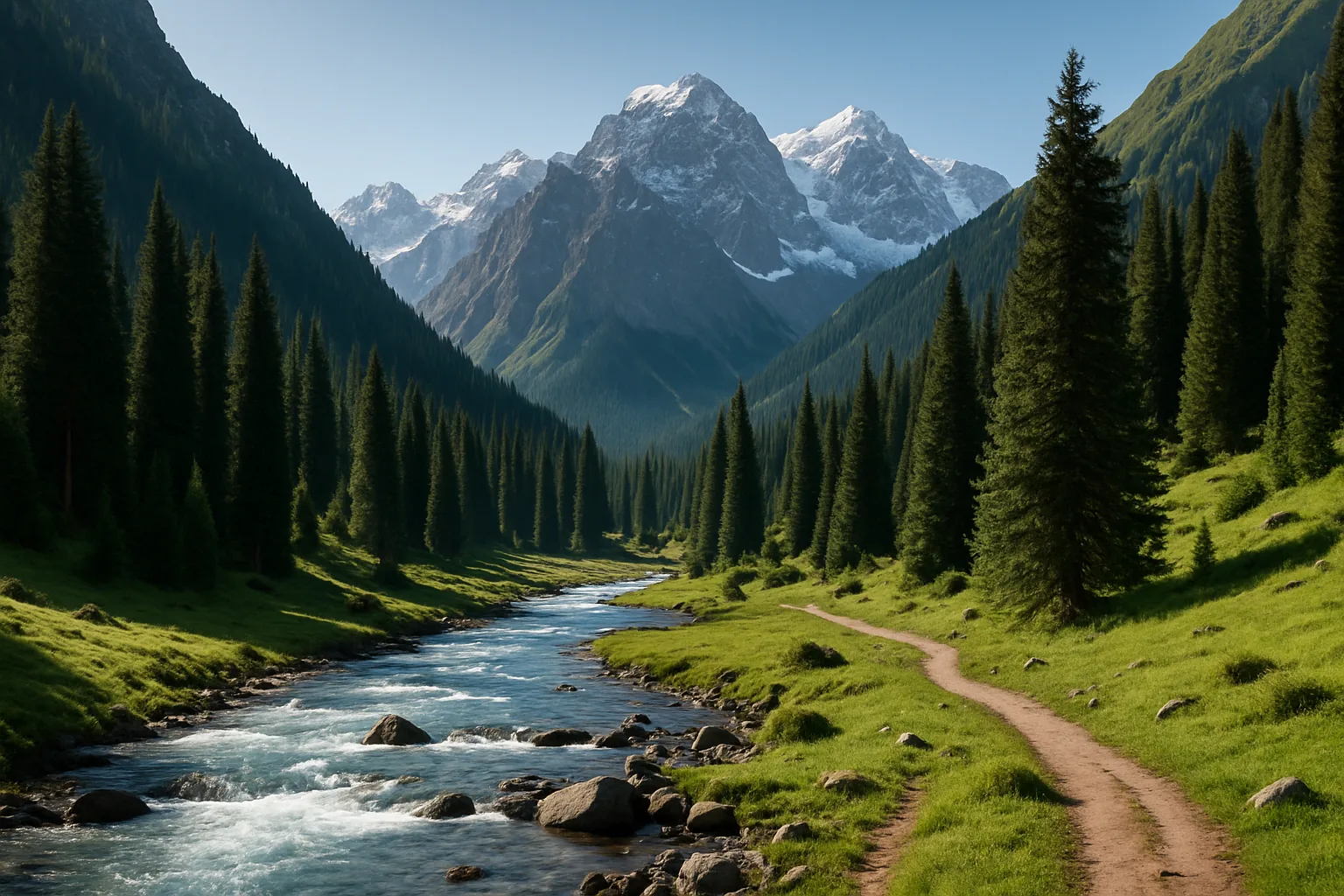
As Kyrgyzstan's daytime heat finally starts to ease into true autumn, one of the country's most distinctive seasonal traditions is about to begin: the walnut harvest at Arslanbob, home to the largest natural walnut forest on Earth. The harvest typically runs from late September through October, drawing both local families and travelers to the forested slopes of the Fergana Range.
The World's Largest Walnut Forest
Arslanbob's walnut forest covers tens of thousands of hectares in the mountains near Jalal-Abad, a natural woodland unlike anything else in Central Asia. For generations, walnuts have been central to the local economy, sold at markets across the region and exported abroad.
How the Harvest Works
Families move into the forest for weeks at a time, often setting up temporary camps among the trees. Men and older boys climb high into the branches to shake down the nuts, while women and children gather what falls below — a communal effort that's as much a cultural tradition as an economic one.
Cooler Mountain Weather Ahead
Harvest season coincides with the forest's transition into autumn. Nights in the surrounding mountains are already dropping into the single digits at higher elevations, and by the time the harvest is in full swing in October, cooler, crisper days become the norm — good walking weather, though warm layers are worth packing for the mornings and evenings.
The Walnut Harvest Festival
The season culminates in the Walnut Harvest Festival, usually held the first weekend of October, with folklore performances, traditional wrestling and games, a walnut-cracking contest, and a long-distance race through the forest hills.
Planning a Visit
Travelers can join the harvest alongside local families through community-based tourism programs in the village, offering a firsthand look at a tradition that has shaped Arslanbob's economy and identity for generations. With the season just getting underway, the next few weeks are the best window to experience it before the forest quiets down for winter.